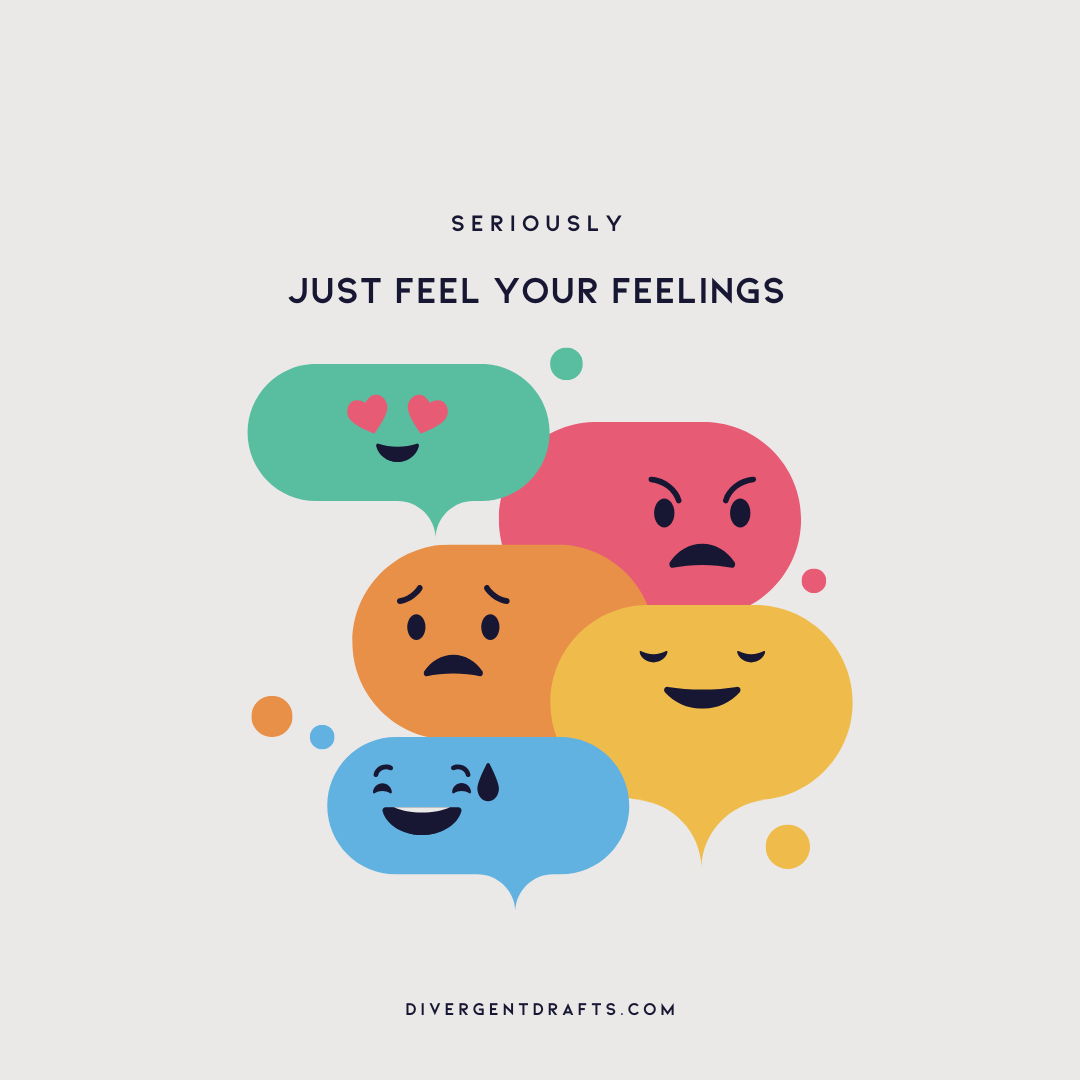
In a recent post, I talked about the coping methods that helped me reconnect with my body when I’d spent years slipping into autopilot and disconnecting without meaning to. Those practices gave me a foundation, a way to stay present, grounded, and aware of what was happening inside me instead of drifting away from it.
But there’s another piece of healing that took me much longer to learn, and it’s the one that we don’t even think about unless it’s brought to our attention.
So today, I want to talk about the part that isn’t pretty, polished, or comfortable… but is absolutely essential if you want to heal.
This is the piece that came after learning the grounding methods, the mindfulness, and after learning how to stay in my body.
Feel Your Feelings, Seriously
I learned how to carry a lot of heavy things when I was in the hospital. That’s what mental health wards are for, really: to keep you safe from yourself, keep others safe from you, and teach you how to handle the kind of emotions that feel too big to survive.
Out of everything I learned there, one lesson changed everything:
actually letting myself feel something.
It sounds obvious. But when I was sitting in that hospital trying to figure out how to keep living through emotional pain that felt like it would split me open, nothing about it was obvious at all.
And honestly? If it were obvious, more of us would already be doing it.
But Del, I do feel my feelings, that’s why it hurts!
Wrong.
We’re judging them.
We’re trying to fix, smother, outrun, silence, or shame whatever is showing up inside us.
I’ve always been that person who bottled everything. The people-pleaser in me spent years performing, “I’m fine,” even when I wasn’t. I perfected the art of falling apart without being seen. Even now, a year into intentionally feeling my emotions, letting myself cry still doesn’t come naturally. Back then, I was drowning in so much emotional pain that I couldn’t keep my mask on. I had responsibilities, a son who needed me, and this belief that falling apart wasn’t allowed.
Except… I needed to fall apart.
I had shoved every feeling into a jar that was already overflowing, and I had nothing left to hold myself together.
The Lesson That Changed Everything
In the hospital, they give you module booklets: coping skills, grounding strategies, and little worksheets you fill out between group sessions. And somewhere between those pages, I finally understood the real purpose of it all.
Learning how to ground yourself during tough emotions and stressful situations wasn’t meant to teach you to shut your emotions off.
It was created to keep you safe while you feel them.
I had never, in my entire life, considered that feelings were safe to feel.
I would put all my effort into shutting them down, or changing the negative into something positive, and trying to stop feeling anything that was negative.
It had never occurred to me how much simpler it would be if I just let my emotions be undisturbed.
So I practiced. Gently. Slowly. Sometimes badly. I kept a script page in my journal; little compassionate phrases I’d say to myself when something heavy hit:
- “Emotions are just emotions.”
- “I can let this exist.”
- “I don’t have to follow it.”
- “I don’t have to fear it.”
Yes, you feel ridiculous talking to yourself like that.
But the thing is… it helps.
Then you’ll use your other coping skills, like mindfulness, to bring your attention gently back to what you’re doing while that feeling just sits there for as long as it needs to.
And no, the feelings don’t magically vanish once you feel them. They come back. Sometimes often. Sometimes harder than before. That’s normal, expected even, and it just means you use your skills again to let it sit and keep you safe while it does. That’s why we need scripts, reminders, and grounding skills.
How I Practice Feeling Safely
The method is simple, even if the experience isn’t:
- Let the feeling show up without trying to change it.
- Use grounding to keep your body safe and steady.
- Talk to yourself with compassion instead of judgment.
- Let the emotion pass when it’s ready, not when you’re ready.
For me, my grounding ritual is making a cup of tea and holding it between my hands. It gives me something warm and solid to return to when the feelings swell.
In the beginning, emotions feel intense because you’re finally giving them permission to exist. That’s okay. It’s uncomfortable, but it’s not dangerous when you’re grounded and supported. Still, please, don’t rely solely on my words. If you’re diving deep into your mental health, talk to a professional, too.
I’ve written openly about my time in the hospital, and one of the events I’ve shared is when I had to sit with a nurse for the evening because I was just learning these skills and needed help. The same pain that brought me there had returned with a vengeance, and I was unsafe again to face them alone. I wanted to try out all my new skills and let that pain be heard without judgment, but I needed to tag in some help.
I’m telling you this part to make sure you understand; this will not make things easier to handle alone. It is simply the missing piece that lets you go from just surviving your pain to actual healing.
Let Them Come. Let Them Go.
You might cry.
You might need someone to hold you.
You might not feel okay the first few times you do this.
But you will grow.
You will get stronger.
You will heal in ways you didn’t realize you needed.
So yes, feel your feelings. Seriously.
Let them exist.
Let them leave.
Don’t chase them.
Don’t smother them.
Don’t assign them meaning they don’t have.
Just acknowledge them, like an annoying roommate who pops up when you least expect it… and then let them wander out on their own.
Leave a Reply