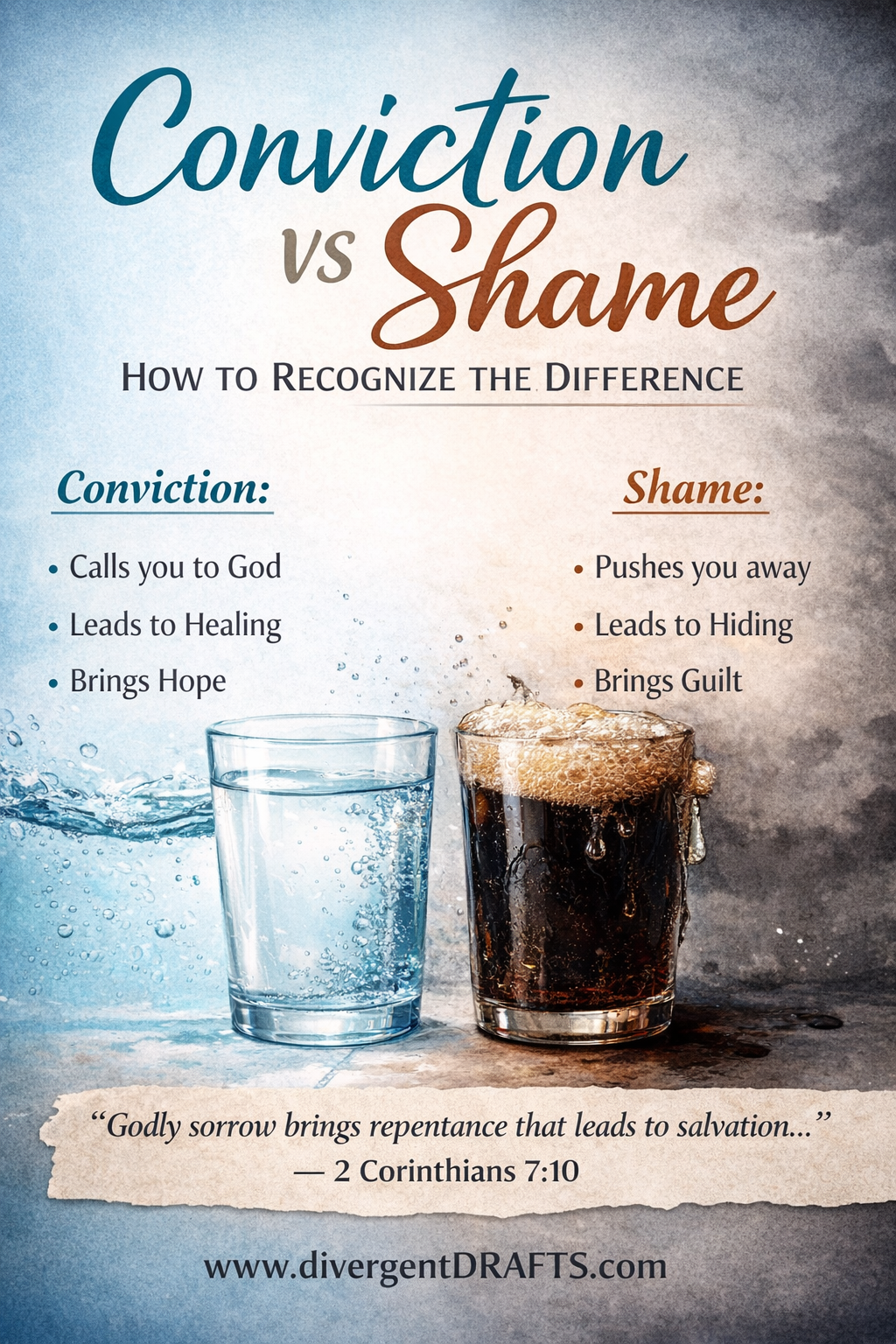
I’ve written before about the importance of allowing ourselves to feel difficult emotions during healing. Conviction often begins in those uncomfortable spaces.
Conviction and shame can feel very similar at first.
Both make you aware that something isn’t right. Both bring discomfort. Both can leave you sitting with the heavy awareness that something in your life needs attention.
But the difference between conviction and shame is growth.
When the Spirit convicts you, it comes with love and the intent to restore. Conviction points to what needs to change, but it also points you toward the One who can change it.
Shame is different.
Shame doesn’t come with a path forward. It only brings guilt and self-condemnation. Instead of drawing you toward healing, it convinces you that you should hide.
Conviction says, come closer.
Shame says, run away.
When Conviction Starts to Feel Like Shame
The tricky part is that conviction can easily turn into shame if we stop paying attention to the source.
Think of it like a glass of pop.
If you start pouring water into that glass, the water pushes the dark liquid upward until it begins to spill over the edge. At first, the mixture still looks dark and fizzy. It can even feel messier than before.
But the water keeps flowing.
Eventually, the glass becomes clear.
Conviction works the same way. It’s the living water pushing the darkness out of our lives. But when that darkness rises to the surface, our response matters.
When guilt begins to bubble up, it’s easy to mistake that moment for condemnation. We start believing the lie that we should feel ashamed of ourselves.
And that’s the moment we have to choose where we run.
What Shame Does
Shame tells us to isolate.
Shame tells us to hide from God.
Shame whispers that we should stay away until we’re better.
Shame pulls us away from the very source of healing.
What Conviction Does
Conviction does the opposite.
Conviction sends us toward God, not away from Him.
Because when you are connected to the source, even when the water looks murky, you know something important is happening: the glass is being cleaned.
Left on our own, we can easily drown in guilt.
But when we run to God instead of hiding from Him, the water keeps flowing—and eventually, the glass becomes clear.
Scripture Reminder
“Godly sorrow brings repentance that leads to salvation and leaves no regret, but worldly sorrow brings death.”
— 2 Corinthians 7:10
Godly sorrow leads to repentance and restoration.
Shame only leads to isolation.
Conviction invites us into healing.
Shame tries to convince us to stay broken.
And the difference between the two is everything.
Leave a Reply